Dive Brief:
- The availability of conventional generation fell in 2025, “largely driven” by declining performance of coal and gas generation, which saw a 39.8 TWh and 19.1 TWh increase in unavailable energy, respectively, the North American Electric Reliability Corp. said in its 2026 State of Reliability report.
- “This is driving a reduction in deployable reserves, which are shrinking as forced outage rates increase, creating potential for tight operating conditions that can lead to system events,” NERC said.
- Annual weighted equivalent forced outage rates spiked to 9.2% in 2025, “compared to historical norms rarely exceeding 8%,” according to NERC. “Coal and combined-cycle units were the primary drivers of this increase.”
Dive Insight:
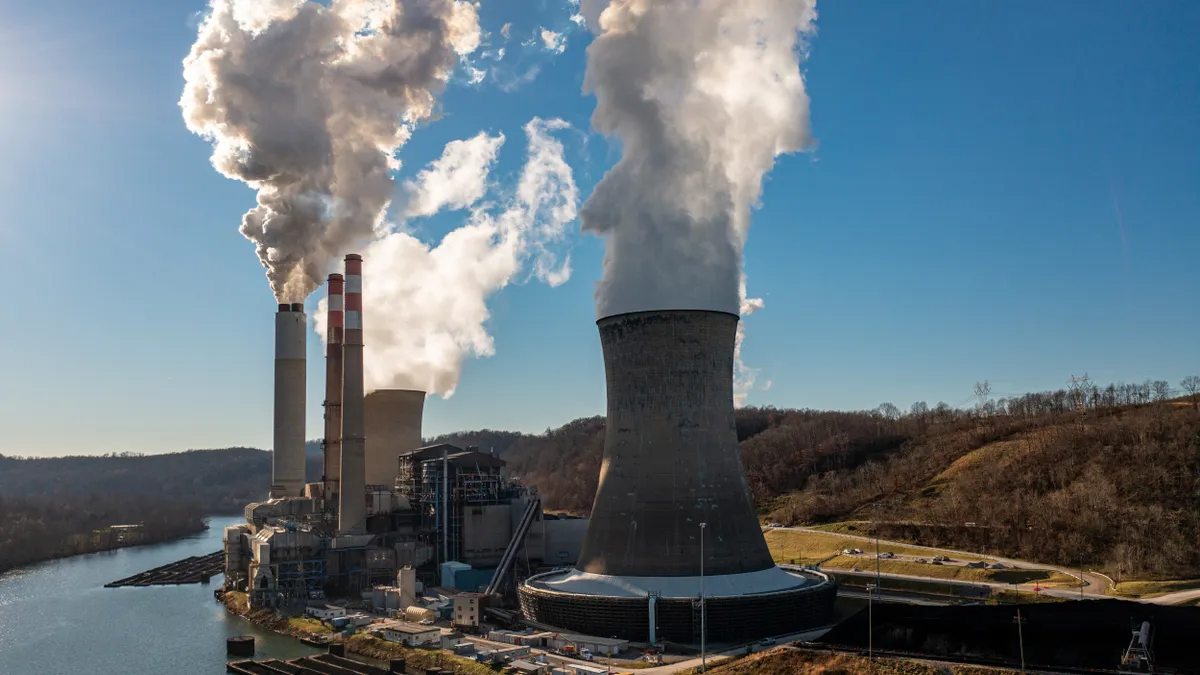
“Most large coal units are over 40 years old and are expected to be retired in the relatively near future,” the report said. “These large coal and combined-cycle units were not designed for regular cycling, which has become an operational requirement in some areas and a necessity to maintain economic viability in others. These factors compound to increase the likelihood of failure over time.”
Demand growth and large load integration continue to challenge operators, NERC said. In February 2025, 1.8 GW of data center customer-initiated load reduction occurred in the Eastern Interconnection due to a transmission fault, and a different event in the same month resulted in 428 MW of data center CILR.
“These events demonstrate that the reliability challenges from large loads will increase as these facilities become more prevalent on the grid,” the report said. “It remains important for grid planners and operators to understand and study the expected performance of the large load facilities during grid disturbances.”
The bulk power system and bulk electric system are continuing to undergo “a rapid resource mix transformation as conventional generation retirements continue to be replaced primarily by natural gas and increasing [inverter-based resource] penetration,” NERC said.
Rapidly rising IBR penetration from resources like wind, solar and battery storage “continues to increase operational complexity, particularly in regions experiencing reduced inertia, high renewable penetration during light-load conditions, or rapidly changing power flow conditions,” according to the report.
The penetration of battery energy storage systems has “rapidly increased” since 2022, the report said, and approximately matched solar growth in 2025. NERC expects that growth to continue, “requiring observation and analysis of this resource’s capabilities.”
The report noted a unique failure event in January 2025, when a 300-MW BESS facility “experienced thermal runaway during routine testing that ultimately resulted in the functional destruction of a previous-generation warehouse-style facility.”
“While outages internal to the plant regularly occur with other generation resources of similar or greater capacities, the permanent, unplanned loss of a non-BESS facility is exceedingly rare,” NERC said. “As such, this type of failure represents a risk consideration unique to BESS that needs to be taken into consideration as the resource continues to expand.”
However, NERC doesn’t think these failure events “represent a significant concern to overall system reliability at this time,” and noted that BESS resources are able to provide load curve smoothing and give conventional generators “more time to come off-line and on-line during the most strenuous portions of the day.”
“Because many older, larger conventional generators were not designed to cycle on- and off-line daily, increasing the ramp period can reduce wear and tear, improving their reliability,” the report said. NERC added that BESS is not a solution for long-term, widespread events like major winter storms, as battery systems have limited capacity and their role is to “rapidly recover and maintain frequency until additional resources can come on-line for indefinite system support.”