Dive Brief:
- Grid-enhancing technologies, or GETs, and increased demand response could ease electricity price pressures caused by growing demand from data centers and advanced computing, according to commentary released Tuesday by Columbia University researchers.
- Rising electricity prices are driven by various factors, including inefficient infrastructure planning, supply chain inflation, misaligned utility incentives, inefficient grid operations, and storm damage and wildfire costs, the researchers with Columbia’s Center on Global Energy Policy said. Higher load growth — including from data centers — is compounding those pressures, they said.
- However, electric bill increases aren’t inevitable, according to the researchers. “Prices rise when new demand triggers high-cost infrastructure buildout, reflects inefficient planning, or shifts costs unevenly across customers,” the researchers said in Electricity Affordability and Load Growth: Diagnosing and Fixing the Problem. “They can fall, or grow more slowly, when low-cost supply is available, existing infrastructure is more fully utilized, and cost allocation ensures that new demand contributes to system efficiency.”
Dive Insight:
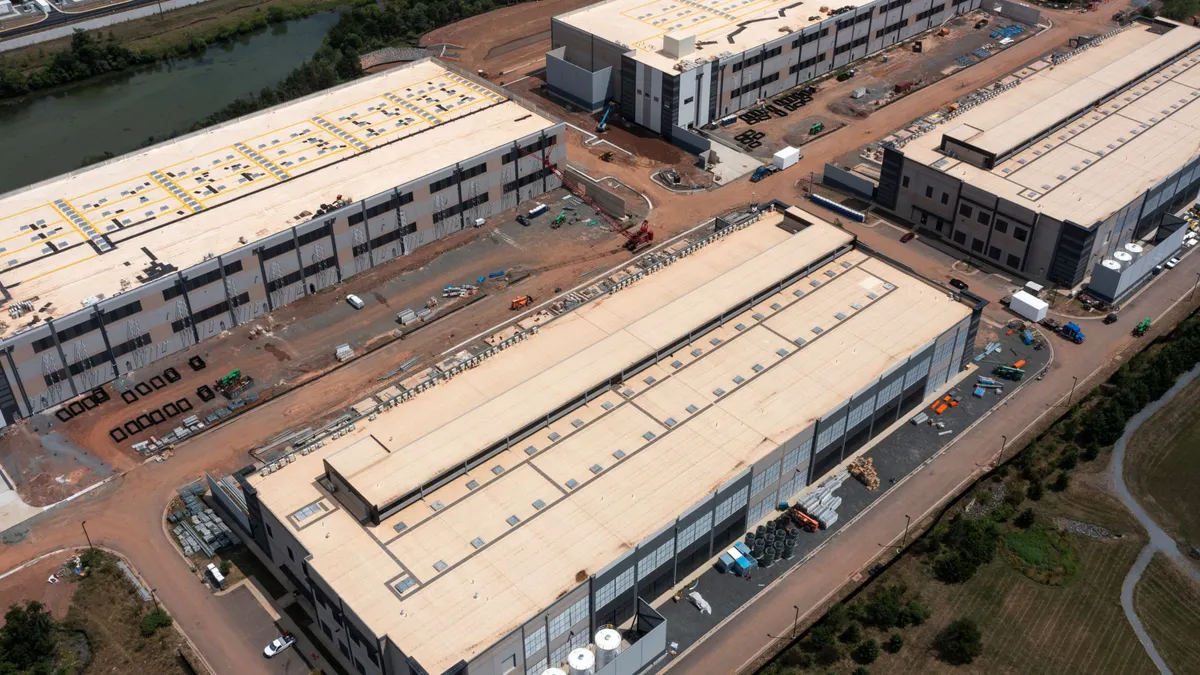
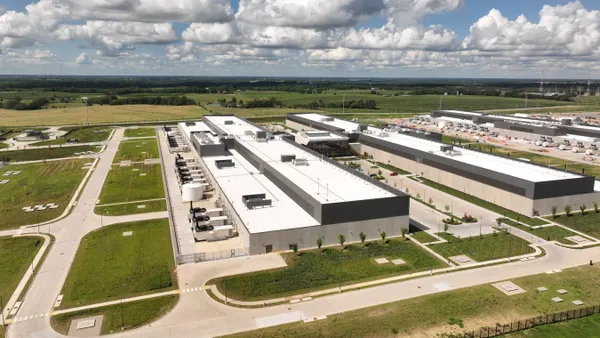
Ongoing data center development — and the vast amounts of electricity they use — will likely continue the debate around how they may affect electricity bills for existing ratepayers.
Data centers could use 9.5% to 15.3% of all electricity in the U.S. by 2030, up from 4.7% in 2024, Lawrence Berkeley National Laboratory researchers said in a report released last week. It is also an increase from a 6.7% to 12% range by 2028 the researchers made in a forecast two years ago.
Citing recent findings from another LBNL report, the Columbia researchers noted that average residential retail electricity prices roughly tracked the rate of inflation from 2019 to 2024. Last year, however, those prices increased by 6% in nominal terms, more than twice the rate of inflation, they said.
Last year, investor-owned utilities sought $18 billion in rate increases — the most since the mid-1980s, the Columbia researchers said, pointing to the LBNL report. Regulators approved 66% of the dollar value of requested rate increases in decisions last year, they noted.
Near-term cost relief could come from commercially available GETs, such as dynamic line ratings and advanced conductors, according to the commentary. Analysis in Proceedings of the National Academy of Sciences, for example, estimates that replacing existing transmission lines with advanced conductors could produce $180 billion in savings by 2050, the Columbia researchers said.
Demand response could also be tapped to constrain potential cost increases, according to the commentary.
“Large-load flexibility — particularly data center load shaping, or reducing usage during peak periods — offers a complementary lever for managing peak demand without relying on high-cost, low-utilization generation,” the researchers said.
However, structural changes may be needed to encourage GETs and demand response solutions as well to tackle other cost drivers in the utility sector, according to the commentary.
Under traditional utility regulation, utilities receive a roughly 9% to 10% return on their capital investments, the Columbia researchers noted.
“This regulatory structure rewards capital deployment more than system optimization,” they said. “As long as frameworks remain oriented toward proving ‘need’ for new capital investment rather than systematically evaluating lower-cost alternatives, the pace of deployment will lag.”
Performance-based regulation, which ties utility returns to specific outcomes, is an option, “but data are still being assembled on its effectiveness at cost management,” the Columbia researchers said.
Other medium-term cost containment options include: ensuring that data center driven costs are fairly allocated and making sure that price signals can lead to new power supplies, according to the researchers.
“Interconnection and new-build transmission timelines that take years sever the link between price signals and supply entry,” the researchers said. “Higher capacity prices mostly end up paying existing generators more rather than inducing new construction, and those extra costs are passed on to consumers through their electricity bills over time.”
The researchers also called for managing storm, wildfire and cybersecurity risks.
“Delivering affordable electricity depends on aligning supply, infrastructure, and cost allocation so that rising demand can drive higher utilization and lower costs — taking advantage of load growth as an opportunity, rather than a liability,” the researchers said.