Ann Garth is a senior geothermal associate at the Clean Air Task Force, where she develops and advocates for policies to promote next-generation geothermal resources. Dan West is CATF's senior Western regional policy manager, with prior experience at Rivian, the U.S. Senate, the Natural Resources Defense Council and Audubon.
Later this month, Western governors, policymakers and energy leaders will gather in Salt Lake City to confront a shared challenge: how to deliver abundant, affordable and reliable energy amid rising electricity demand and aging infrastructure. As the current chair of the Western Governors Association, Utah Gov. Spencer Cox is carrying the message that the American West already holds a powerful clean energy advantage beneath our feet that can enhance an all-of-the-above energy strategy.

Next‑generation geothermal energy has quietly moved from niche technology to a credible solution. Advances in drilling and underground engineering mean geothermal power is no longer confined to the rare pockets of underground hot water it once relied on. Today, it can be developed across much of the Western United States to provide always‑on, emissions‑free energy.
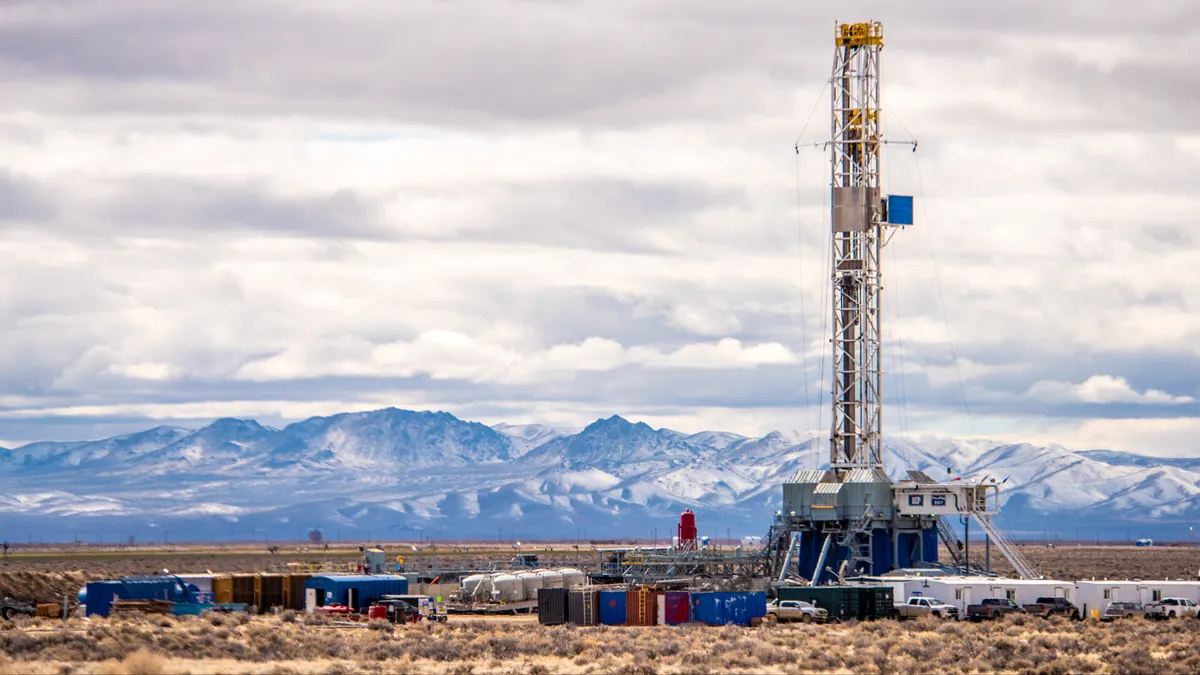
Utah is at the center of this opportunity. The state hosts FORGE, the U.S. Department of Energy’s flagship enhanced geothermal research site, which has helped advance new geothermal technologies and sparked private investment across the region. Utah’s subsurface expertise, skilled workforce and geographic location position it to help turn geothermal innovation into large‑scale deployment.

However, the main barrier to geothermal growth is no longer technology advancement. It’s policy and finance. Across the West, electricity demand is growing faster than in most regions of the country, driven by population growth, electrification, industrial reshoring and energy‑intensive sectors like data centers. At the same time, drought is constraining hydropower, extreme heat is stressing grids and aging fossil assets are retiring.
Meeting this moment requires new sources of clean electricity that can run around the clock. Next‑generation geothermal fits that role with the added benefit that it doesn’t depend on fuel imports, is land‑efficient and is locally sourced. It also relies on skills already common in oil‑ and gas‑producing states such as Utah, offering new job opportunities for host communities around the West. Even a small fraction of the West’s accessible geothermal heat could power entire states.
Despite this promise, geothermal deployment remains slower than it should be in the West, with several policy barriers holding the industry back. Uncertainty about grid access is the biggest obstacle. Geothermal projects take years to develop, and they need early certainty about transmission planning and grid connection to secure financing and stay on schedule.
Outdated permitting frameworks, often written for earlier generation geothermal, don’t work for modern systems. The result is delay, higher costs and financial risk without clear environmental benefits. Financing presents another hurdle: first‑of‑a‑kind projects in new regions face risks that private capital alone has not historically absorbed without public partnership. And valuable subsurface data sits in filing cabinets across the West because state geological surveys don’t have the resources to scan and digitize it.
By pairing clean, always-on technologies like geothermal with accelerated transmission development and stronger regional coordination, the West can unlock its gigawatt-scale geothermal potential. Governors can modernize geothermal regulations, invest in subsurface data to lower project risks, and deploy targeted grants or risk‑mitigation tools that unlock private capital.
They can also lead on transmission by coordinating across state lines, supporting new planning authorities and ensuring clean, firm resources are properly valued in grid planning. These steps do not pick winners. They simply allow promising technologies to compete and scale.
Utah has already shown leadership by advancing geothermal innovation. The next step is translating that innovation into deployment, not only within the state but across the West. Gov. Cox’s Western Governors Association Chair Initiative, Energy Superabundance: Unlocking Prosperity in the West, is uniquely positioned to accomplish this by including geothermal in the broader conversation on the energy sector as a whole. With smart coordination and healthy policy competition between states, next-generation geothermal energy can become an anchor for a more resilient, affordable and reliable energy system for the entire region.