Shahid Mahdi is a director at energy regulatory intelligence firm EnerKnol and an expert in critical infrastructure policy.
In a single year, the PJM Interconnection has gone from a relatively stable market to a scarcity-driven system: capacity costs are up nearly 300%, congestion costs are up almost 80% and total system costs have risen over 50%, largely reflecting a grid under stress from explosive new load.
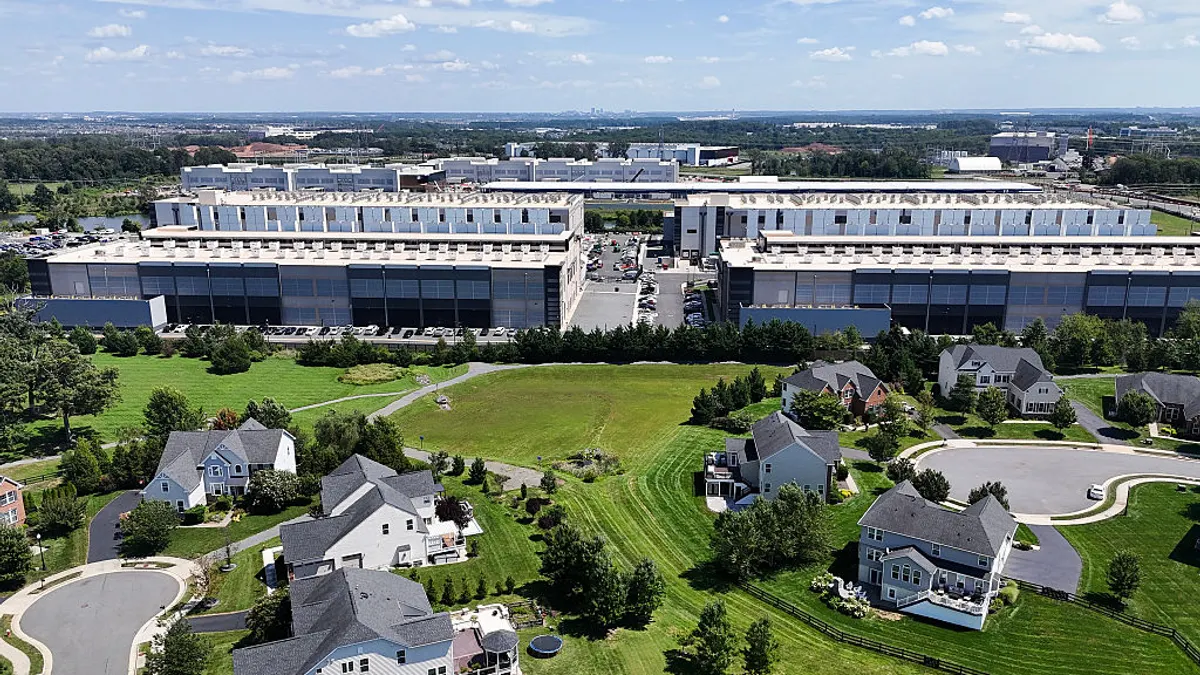
While the operator's newly released 2025 financial report reads like a standard accounting document, the numbers underneath are screaming that a massive demand shock is here. Driven by the voracious energy appetite of AI data centers, hyperscalers and widespread electrification, America's largest wholesale electricity market is breaking upward.
The most alarming metric is the explosion in capacity costs. In 2024, PJM’s capacity billings sat at $2.69 billion; in 2025, they skyrocketed to $10.39 billion. That is a staggering 285% year-over-year increase. This leap is the single best proxy for what we are witnessing across the grid: extreme scarcity pricing driven by surging demand colliding with insufficient supply. The energy transition requires new generation, but chronic interconnection backlogs and permitting delays are preventing supply from keeping pace with the artificial intelligence boom.
Furthermore, this is not an incremental growth story — it is a system-wide repricing event. Total PJM market settlements ballooned from $51.7 billion in 2024 to $80.5 billion in 2025. That represents a 56% increase in just one year, fundamentally shifting the economics of power across the 13 states PJM serves.
Digging deeper, the report reveals that energy and congestion costs are spiking in tandem. Energy markets jumped 57%, from $25.7 billion to $40.2 billion. Concurrently, transmission congestion costs exploded by 78%, soaring from $4.1 billion to $7.3 billion. This combination tells us two things: massive amounts of new load are hitting the system, and the grid simply cannot handle it efficiently. Transmission has become the ultimate bottleneck.
Finally, the day-to-day cost of maintaining grid stability is quietly skyrocketing. PJM is paying significantly more just to keep the system balanced and reliable. Operating reserves jumped nearly threefold, from $268 million to $764 million. The regulation market spiked 69%, from $183 million to $309 million. Synchronized reserves essentially doubled, from $87 million to $176 million. Reliability costs are rising everywhere because the margin for error is shrinking.
Unless we dramatically accelerate our supply by resolving interconnection and permitting delays, these unprecedented scarcity prices will become our new normal, acting as a tax on the broader economy to fuel the intelligence age. We cannot simply build our way out of this crisis using 20th-century bureaucratic processes. If we are to avoid an era of persistent grid instability and skyrocketing utility bills, regulators, grid operators and lawmakers must enact immediate, structural fixes to how we permit and connect power.
First, we must reexamine the interconnection queue.
The Federal Energy Regulatory Commission and regional operators must move beyond the foundational cluster-study reforms of Order 2023. PJM is already taking steps in the right direction by proposing an expedited interconnection track to accelerate the review of up to 10 large, advanced projects annually, and by establishing a new process to transfer capacity interconnection rights directly from a retiring power plant to a replacement resource at the exact same site. Furthermore, FERC must swiftly finalize its recent rulemaking (RM26-4) to streamline joint, co-located load and generation interconnection requests, which will significantly shorten study timelines and reduce grid upgrade costs.
State utility commissions must also get creative with the capacity we already have. States should follow Indiana’s lead in enacting legislation that requires utilities to analyze and utilize surplus interconnection service, allowing new resources to connect to the grid using a facility’s existing, unneeded interconnection rights. Simultaneously, regulators must incentivize the deployment of grid enhancing technologies, such as dynamic line ratings and advanced power flow controllers. These technologies can unlock 15% to 17% more capacity on existing lines and can be deployed at a fraction of the cost and time of traditional infrastructure upgrades.
Second, Congress and state legislatures must dismantle the permitting labyrinth that stalls critical infrastructure.
At the federal level, lawmakers need to pass comprehensive permitting reform — such as the proposed CERTAIN Act — which would establish firm, non-negotiable timelines for environmental reviews, mandate interagency coordination to eliminate redundant studies and provide clear legal protections for lawfully issued permits. This is possible at the state level too: examine New York’s RAPID Act, which took effect in 2024 and consolidated siting authority to create a single, coordinated permitting pathway for major renewable facilities and high-voltage transmission lines.
For the utility sector and its regulators, the mandate is clear: We must operate at the speed of the technology we are trying to power. We must fast-track replacement generation, deploy grid-enhancing technologies and pass decisive permitting reform. If we fail to modernize the regulatory machine, we will force the American public into a disastrous outcome: accept an unaffordable, unstable power grid and forfeit our technological future.