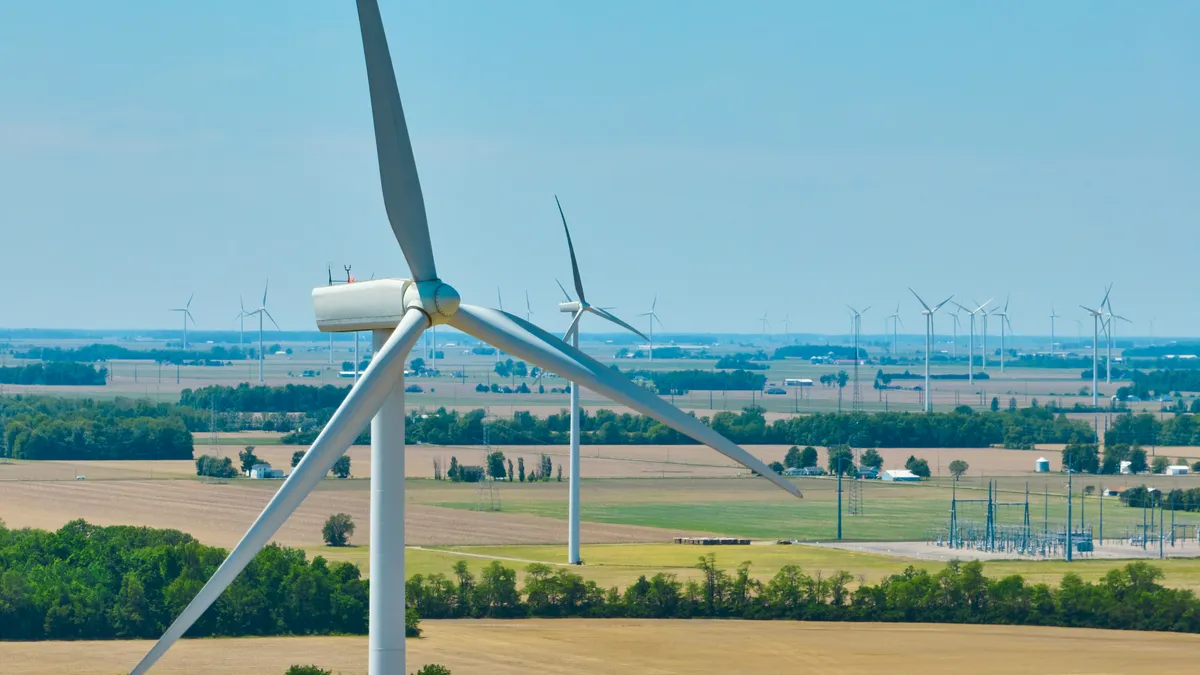
CMS Energy said Tuesday that it would sell off non-utility renewable energy development operations at its NorthStar Clean Energy Services subsidiary, a non-regulated entity that operates about 1.8 GW of generation in Michigan, Ohio, Texas and other states.
The Jackson, Michigan-based company said the move would simplify its corporate structure, net about $500 million and set it up to generate nearly all of its earnings from its regulated utilities after 2027. Those utilities, which do business as Consumers Energy, serve 1.8 million electric customers and 1.7 million gas customers across central and western Lower Michigan.
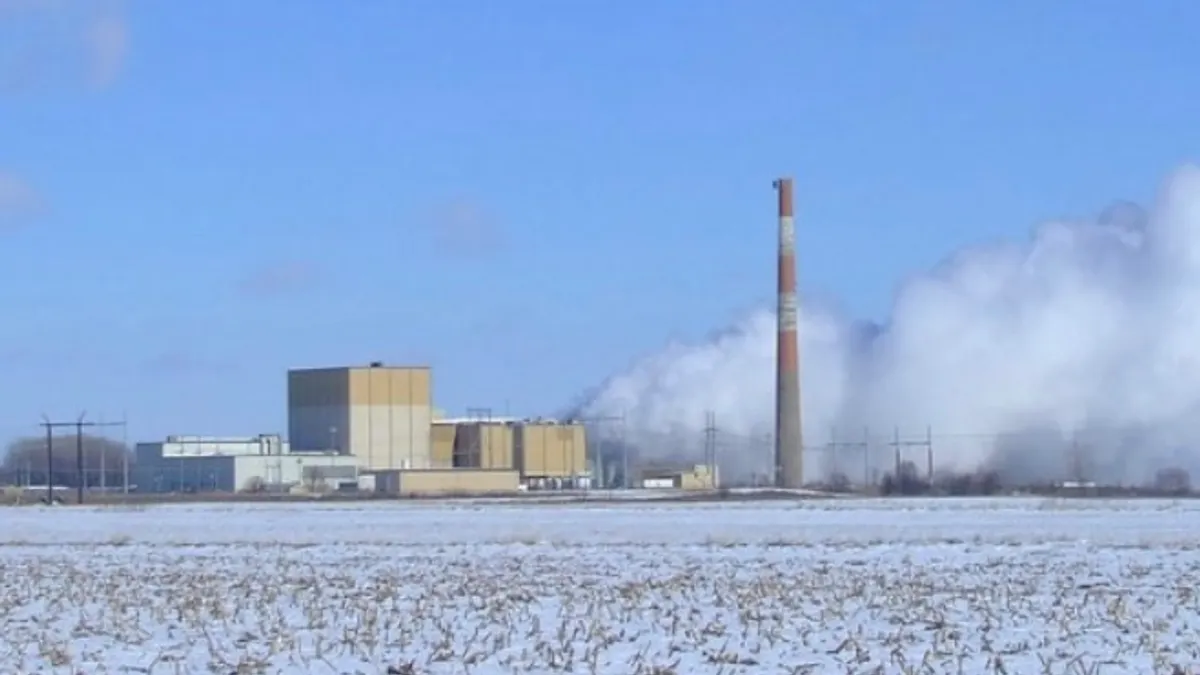
Under the plan, CMS Energy will retain NorthStar’s key assets in Michigan, the company said. Those include Dearborn Industrial Generation, a 770-MW waste- and gas-fired cogeneration plant near Detroit; two gas-fired peaker plants in south-central Michigan; and four Michigan solar installations totaling about 500 MW of capacity.
“We're reallocating capital away from NorthStar so more of the upside and more of the growth will come from the utility. And over time, we're financing that more efficiently by not allocating capital to renewable development at NorthStar,” Srikanth Maddipati, CMS Energy’s newly installed chief financial officer, said on the company’s Tuesday earnings call.
CMS Energy’s second-quarter adjusted earnings plunged 48% to 37 cents/share from 71 cents/share for the same period in 2025, it said Tuesday.
The company said the combined impacts of relatively mild winter and spring weather and infrastructure damage from successive storms were partly to blame for softer profits at its regulated utilities.
In part to mitigate persistent reliability issues, CMS Energy President and CEO Garrick Rochow said on Tuesday that Consumers had requested a two-year investment recovery mechanism to cover grid-hardening costs. The request follows the Michigan Public Service Commission’s one-year, $226 million extension in March of a previously authorized investment recovery mechanism for Consumers’ electric distribution system.
The latest investment recovery mechanism was part of an electric rate case Consumers filed last month seeking $456 million in additional revenue and a 10.25% return on equity. Consumers' previous rate case wrapped up in March with a commission order authorizing a $276 million revenue increase and 9.9% return on equity. The company on Tuesday called that order a “constructive outcome” that gave it about 66% of what it asked for.
Data center uncertainty
Consumers’ prospective large-load customer pipeline remains around 9 GW, similar to recent quarters, the company said. It has energized about 135 MW this year and has 1 GW to 2 GW in the “final stages” of contracting, it said.
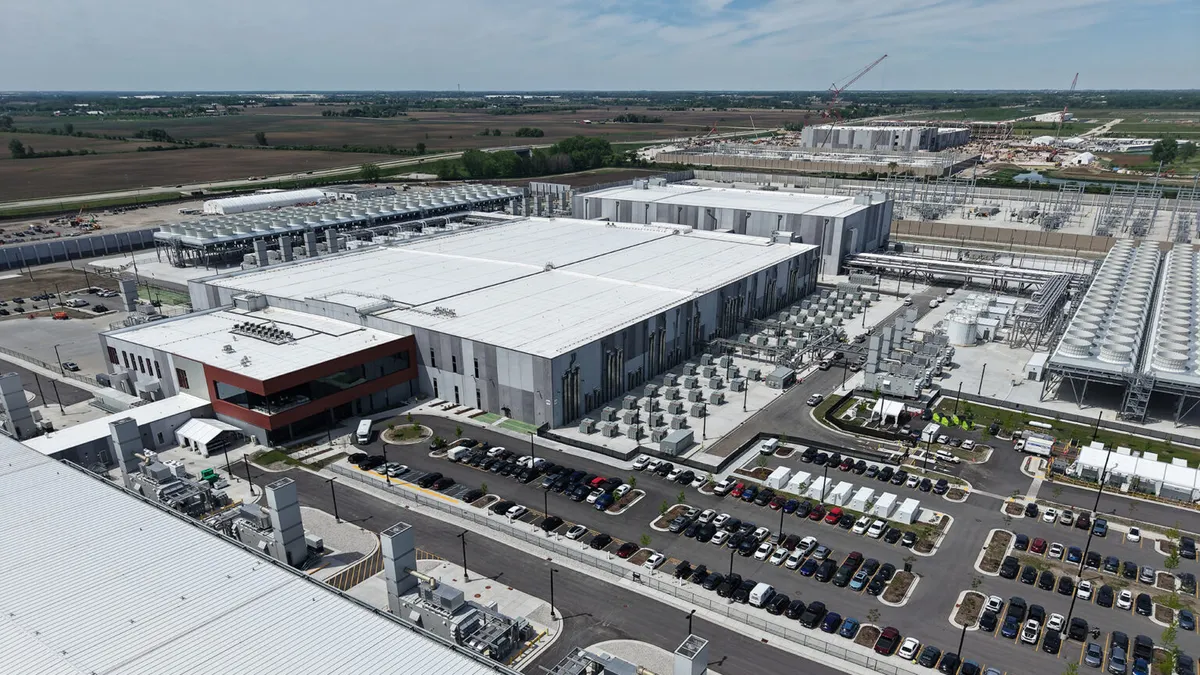
A previously announced 20-year tariff agreement to provide up to 1 GW of power to a planned Microsoft data center in a semi-rural area near Grand Rapids is in flux amid mounting local opposition. The township tabled Microsoft’s rezoning request in April after initially signaling support for the project.
Without mentioning Microsoft by name, Rochow acknowledged the rezoning struggles but said “the customer” was looking at multiple locations in Consumers’ territory.
“So we're going to let that play out … [but] that contractual piece can apply anywhere in our service territory, which is great,” he said.
Nonetheless, some stock analysts say the delay puts Consumers at a disadvantage to its main in-state rival, DTE Energy. The Detroit-based company’s electric utility is well on its way to bringing an Oracle data center online in the southeastern corner of the state, Julien Dumoulin-Smith, senior analyst with Jefferies, said in an investor note last week.
“CMS' CEO has expressed confidence in the ability to secure data center contracts, however the peer contrast is direct: DTE's Saline project broke ground in early June with the Governor attending, while the CMS lead site has no scheduled vote,” Dumoulin-Smith said.
J.H. Campbell power plant costs increase
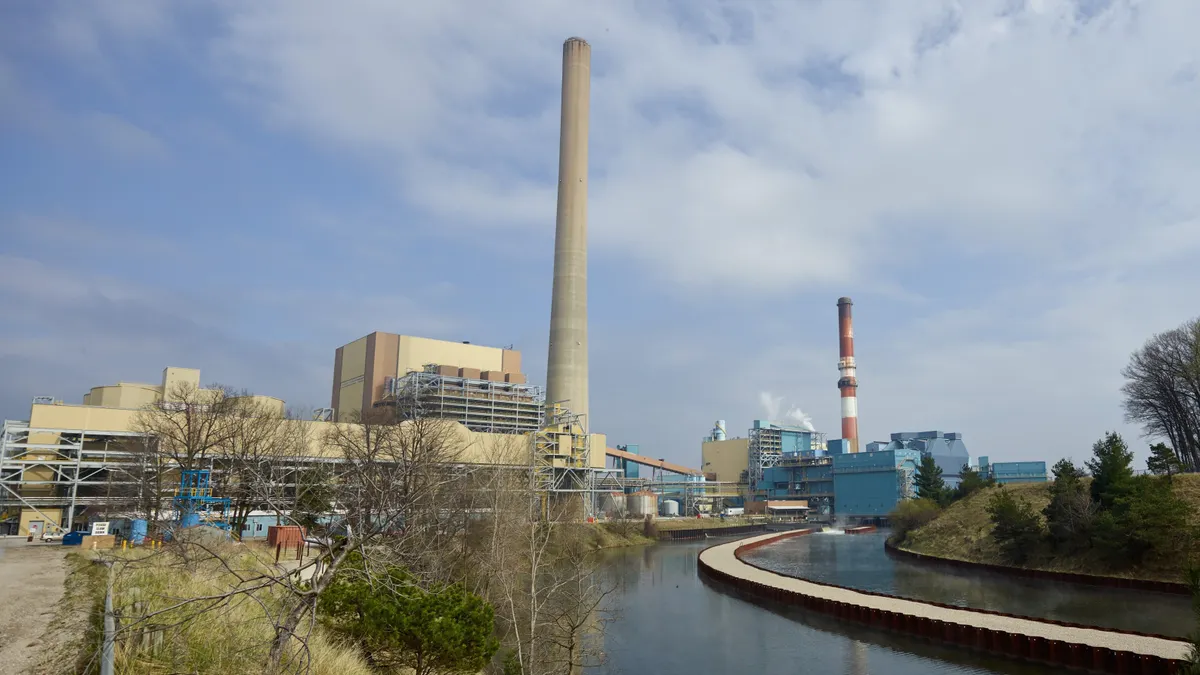
Neither Rochow nor Maddipati mentioned the U.S. Department of Energy’s now-yearlong campaign to delay the retirement of Consumers’ J.H. Campbell Generating Complex. The 1,407-MW coal-fired power plant was set to power down for good in May 2025.
In a required filing with the U.S. Securities and Exchange Commission this week, however, the company disclosed that complying with five consecutive “emergency” stay-open orders under Section 202(c) of the Federal Power Act had cost it $259 million through June 30 of this year.
The latest figure is a substantial increase from three months ago, when Consumers said it had incurred $138 million in costs to run Campbell through March 31. In the filing this week, the company said the Federal Energy Regulatory Commission is still considering its request to recover the $42 million net cost of complying with DOE’s initial 90-day stay-open order, which ran from late May to late August 2025.
Consumers intends to lodge cost-recovery petitions with FERC for the four subsequent orders despite ongoing legal challenges from environmental groups, consumer advocates and other states in the Midcontinent Independent System Operator’s territory, it said.