Several North American grid assessment areas will see sharp changes in demand response availability this summer, compared with 2025, according to the most recent assessment from the North American Electric Reliability Corp.
The U.S. regions with the most significant changes include the Southeastern Electric Reliability Corp. Central region (+172.3% from 2025), the Electric Reliability Council of Texas (+54.9%), the Southwest Power Pool (+25.8%) and New England (-13.3%).
Demand management is getting more attention from utilities looking to find near-term solutions to add capacity to the grid, due in large part to increasing demand from data centers and large industrial loads. NERC expects peak demand across the North American bulk power system to increase by 224 GW, or 24%, over the next 10 years.
The reasons for the shifts vary by region, NERC said in its assessment. For example, ERCOT’s positive change is due to updated load modeling that better reflects the responsive behavior of “large computation loads” — data centers — during peak periods, it said.
The positive change in the SERC Central region, much of which is served by the Tennessee Valley Authority, is due to new demand-side management programs and industrial load enrollments, NERC said.
In ERCOT, NERC said it reduced its 2026 summer forecast for total internal demand by 1.9 GW, or 2.3%, due to updated modeling of large computational load behaviors. It dropped its forecast for net internal demand by 3.7 GW, or 4.6%, “because more data centers can be curtailed by grid operators when needed to prevent grid emergencies,” it said.
Texas law requires loads of 75 MW or more that interconnect from 2026 onwards to accept mandatory curtailment during firm load shed events. Texas has a separate, competitively procured reliability service open to large loads on a voluntary basis as well.
ERCOT is one of the few assessment areas where NERC expects net internal demand to fall this year, however. Nineteen of NERC’s 23 assessment areas are set for higher net internal demand, with the exceptions being winter-peaking Québec and WECC’s Rocky Mountain and Mexico regions, NERC said.
In some other NERC assessment areas that saw sharp shifts in demand response availability, the category represents a negligible share of total internal demand. For example, NERC expects Southwest and Northwest regions of the Western Electricity Coordinating Council to shift by +82.9% and -93.3%, respectively. But official demand response capacity represents less than 1% of projected 2026 internal demand in WECC-Southwest and is virtually nonexistent (just 2 MW) in WECC-Northwest.
Meanwhile, demand response availability was little changed in the PJM Interconnection (-0.4%, to 7,864 MW) and Midcontinent Independent System Operator (+1.1%, to 9,100 MW), according to NERC’s assessment.
NERC has previously identified PJM and MISO as facing particularly high risk of capacity shortfalls over the next few years. The reliability nonprofit downgraded its threat assessment for MISO last year after pushback from the grid operator’s independent market monitor, however.
David Patton, president of Potomac Economics, said at a Federal Energy Regulatory Commission technical conference in May 2025 that NERC’s forecast did not properly account for behind-the-meter generation and demand response capacity in MISO, among other factors. Its projection missed more than 8 GW of potential capacity, Patton said.
NERC blamed “mismatched data” in a MISO submission for the mix-up.
NERC still sees high reliability risks in PJM, MISO, ERCOT, WECC-Northwest and WECC-Basin, according to an updated long-term reliability assessment released in January. Its three risk categories are “normal,” “elevated” and “high.”
That forecast blamed planned generator retirements outpacing additions and projected load growth in MISO and PJM. Beginning last May, the Trump administration issued and renewed emergency orders requiring several coal- and oil-fired generators in both regions to run beyond their scheduled retirement dates, citing near-term resource adequacy risks.
Clean energy groups, environmental organizations, ratepayer advocates and even some owners of affected plants have pushed back, saying they are not needed for resource adequacy and saddle utility customers with unnecessary costs. An ongoing lawsuit pitting the environmental nonprofit Earthjustice and three Midwestern states against the U.S. Department of Energy will likely reach the U.S. Supreme Court, industry analysts say.
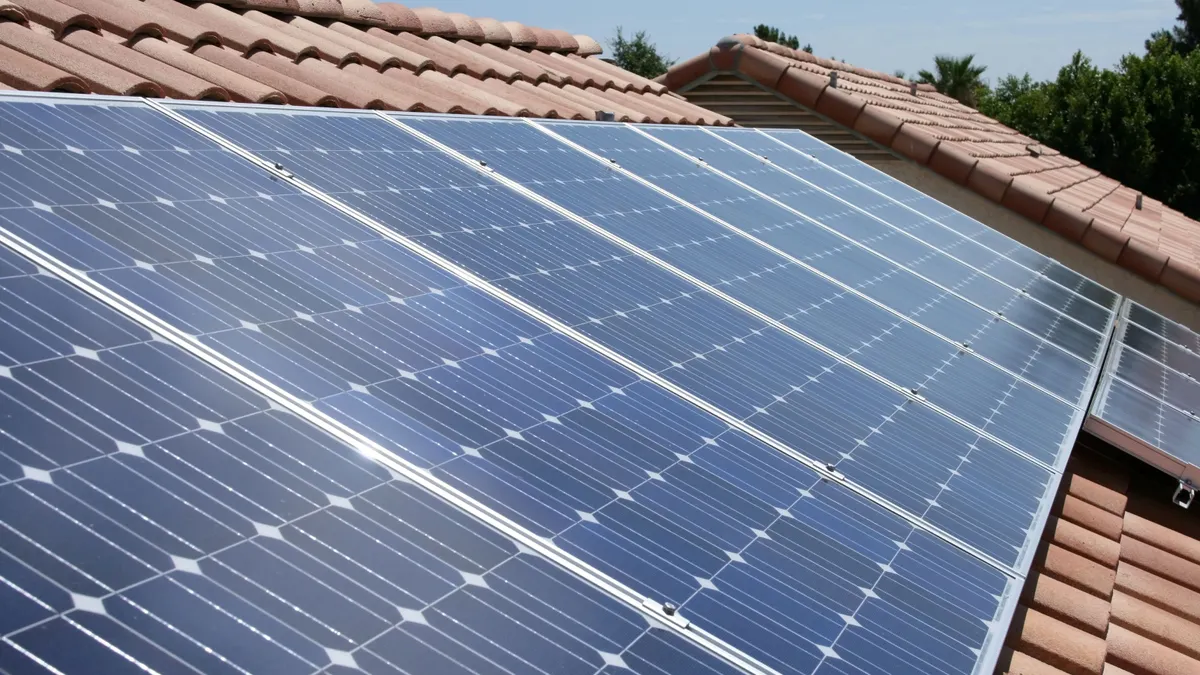
In some parts of the United States, grid operators’ own assessments show behind-the-meter energy assets reducing net load during the afternoon windows when daily summer power demand has historically peaked.
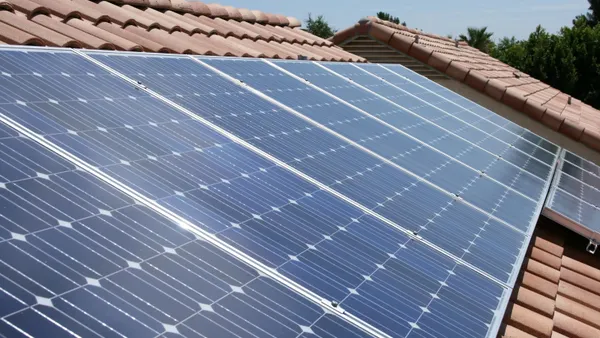
For example, ISO New England’s 2026 summer outlook expects behind-the-meter solar to reduce demand by more than 1,700 MW during the peak hour of demand on days with normal weather conditions. The region now has more than 8,000 MW of behind-the-meter solar, which is enough to push the demand peak later into the evening, ISO-NE says.
Over the next 10 years, ISO-NE expects behind-the-meter solar to play a much larger role in midday net load reduction — up to 6.5 GW by the winter of 2038, according to a forecast released earlier this month. But limited solar irradiation means behind-the-meter solar and batteries will do less to mitigate the region’s early-morning or early-evening seasonal peaks as electrified buildings and vehicles flip it from summer to winter peaking, the grid operator said.